How I Nailed the DELL Trade: A Case Study in Patience and Precision
Some trades are technical. Others are emotional. The best ones? A bit of both — but grounded in a clear plan. In this post, I’m breaking down my recent DELL trade: how I identified the opportunity, structured the position, and why I believe there’s still upside ahead.
1. The Set-Up: Why DELL?
DELL Technologies is often lumped into the "old tech" pile — the PC maker of yesteryear. But that narrative misses the forest for the trees. Behind the scenes, DELL is becoming a major infrastructure player in AI, cloud, and enterprise-grade hardware.
Back in May 2024, when the stock was trading north of $170, I began planning my re-entry points. There was no way I was chasing that parabolic move — but I was watching.
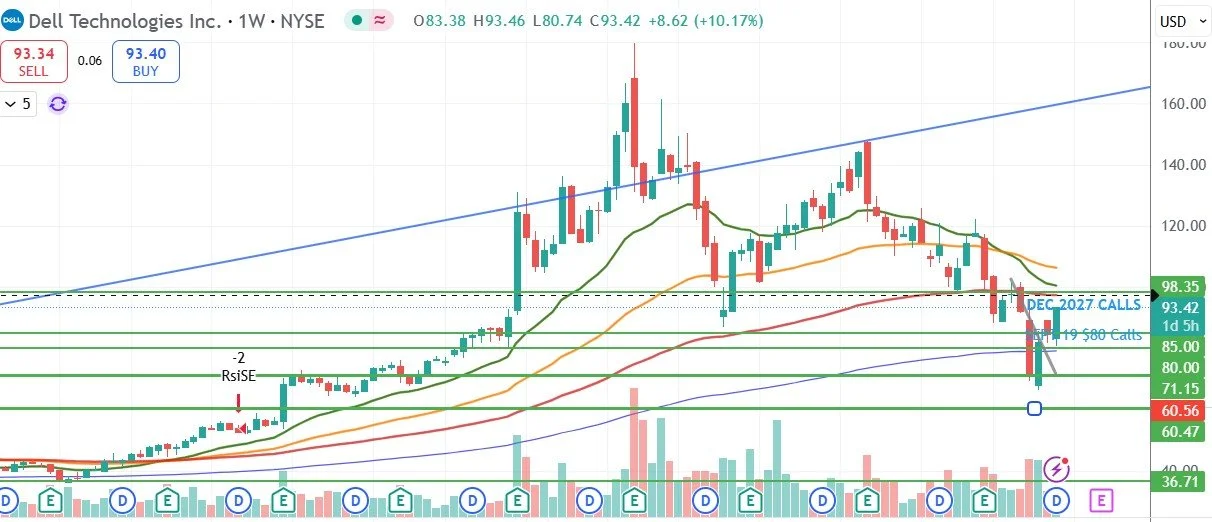
2. Patience Pays: The Technical Levels
I identified two major zones where I believed DELL would return to check in and build a new base:
$71.15 — This level acted as the breakout base for 15 straight weeks prior to its skyward run.
$60.47 — A deeper retracement zone with confluence from 2023’s volume shelf.
Sure enough, as the AI hype cooled and broader markets rotated, DELL slid all the way down and kissed both zones. That’s when I started building my positions.
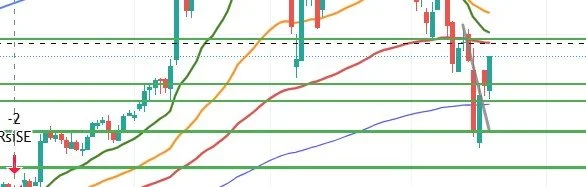
The DELL breakout base for 15 straight weeks prior to its skyward run
3. Execution: The Trades I Took
I entered this trade in two ways:
Short-to-Mid-Term: Bought September 19, 2025 $80 Calls, three contracts at an average price of $11.53.
Sold one contract for a realized profit of $681.67.
Letting the remaining two ride for now.
Long-Term Conviction: Bought December 17, 2027 $85 Calls, two contracts at $20.00 each.
These are showing a gain of $2,300 as of today.
The September calls gave me room to trade the bounce. The 2027 calls are my long bet on the AI infrastructure boom.

DELL SEPTEMBER $80 Calls - FIrst profit target reached

DELL 2027 $85 Calls
4. The Psychology: What Made This Trade Work
Three things:
Pre-Planned Entry Zones — No FOMO. Just structure.
Time Over Timing — I didn’t need to catch the bottom; I just needed enough time on my contracts.
Risk Management — Selling one contract early gave me a “free ride” on the remaining trades.
5. What’s Next for DELL?
Right now, the stock is pushing toward $98. That’s a logical resistance zone, and if it clears, I’ll likely trim another September contract.
As for the 2027s? I’m holding. This is my conviction trade on the continuation of the AI hardware boom. If we get another pullback, I may even add.
Conclusion:
This wasn’t luck. It was patience, planning, and belief in the setup. And while nothing is ever guaranteed in markets, when the pieces align, you have to pull the trigger.
Stay tuned for my next case study — and don’t forget to check out how I used a similar framework to trade SMH and GLD options recently.
Until next time,
Joel | The Accidental Retiree
